Top 5 Features Every School Administrator Needs in a School Management System
Running a school involves much more than managing classrooms. School administrators are responsible for admissions, attendance, academic records, staff management, communication with parents, financial operations, and ensuring the institution runs efficiently. Without the right technology, these responsibilities can quickly become overwhelming.
A modern School Management System (SMS) simplifies these tasks by bringing all administrative functions into one centralized platform. If you're considering investing in a school management solution, here are the top five features every school administrator should prioritize.
1. Student Information Management
Every school generates a large amount of student data, from admission records to academic performance and health information. A reliable school management system should securely store all student records in one place, making them easy to access and update whenever necessary.
With a centralized student database, administrators can:
- Manage admissions and enrollment efficiently.
- Access academic and disciplinary records instantly.
- Track attendance and student progress.
- Generate reports without searching through paper files.
Having all student information organized improves decision-making and reduces administrative errors.
2. Attendance and Performance Tracking
Monitoring attendance and academic performance is essential for improving educational outcomes. An effective school management system should automate attendance recording while providing real-time insights into student performance.
Key benefits include:
- Digital attendance for students and staff.
- Automatic attendance reports.
- Performance tracking across subjects and terms.
- Early identification of students who may need additional academic support.
Automation saves time while providing administrators with accurate data for informed planning.
3. Communication Tools
Strong communication between schools, parents, teachers, and students is vital for academic success. Built-in communication features eliminate delays and ensure important information reaches everyone quickly.
An ideal platform should support:
- Instant announcements and notifications.
- Parent-teacher messaging.
- Event reminders.
- Examination schedules.
- Fee payment notifications.
Effective communication strengthens relationships between the school and its community while reducing misunderstandings.
4. Financial and Fee Management
Managing school finances manually can be time-consuming and prone to mistakes. A comprehensive school management system should simplify fee collection and financial reporting through automation.
Essential financial features include:
- Online fee payment options.
- Automated invoice generation.
- Payment reminders.
- Financial reporting and analytics.
- Expense tracking.
These tools improve transparency, reduce paperwork, and help administrators maintain accurate financial records.
5. Computer-Based Testing (CBT) Integration
As schools continue embracing digital learning, integrated Computer-Based Testing (CBT) has become an essential feature rather than a luxury. A system with built-in CBT capabilities allows schools to conduct secure, efficient, and scalable assessments.
A quality CBT solution should provide:
- Auto-grading to reduce teachers' workload.
- Instant results for faster feedback.
- Randomized questions to improve exam security.
- Comprehensive performance reports.
- Expandable question banks that grow with the curriculum.
With these features, schools can conduct assessments more efficiently while enhancing the learning experience for students.
Why EDUTEK Is the Right Choice
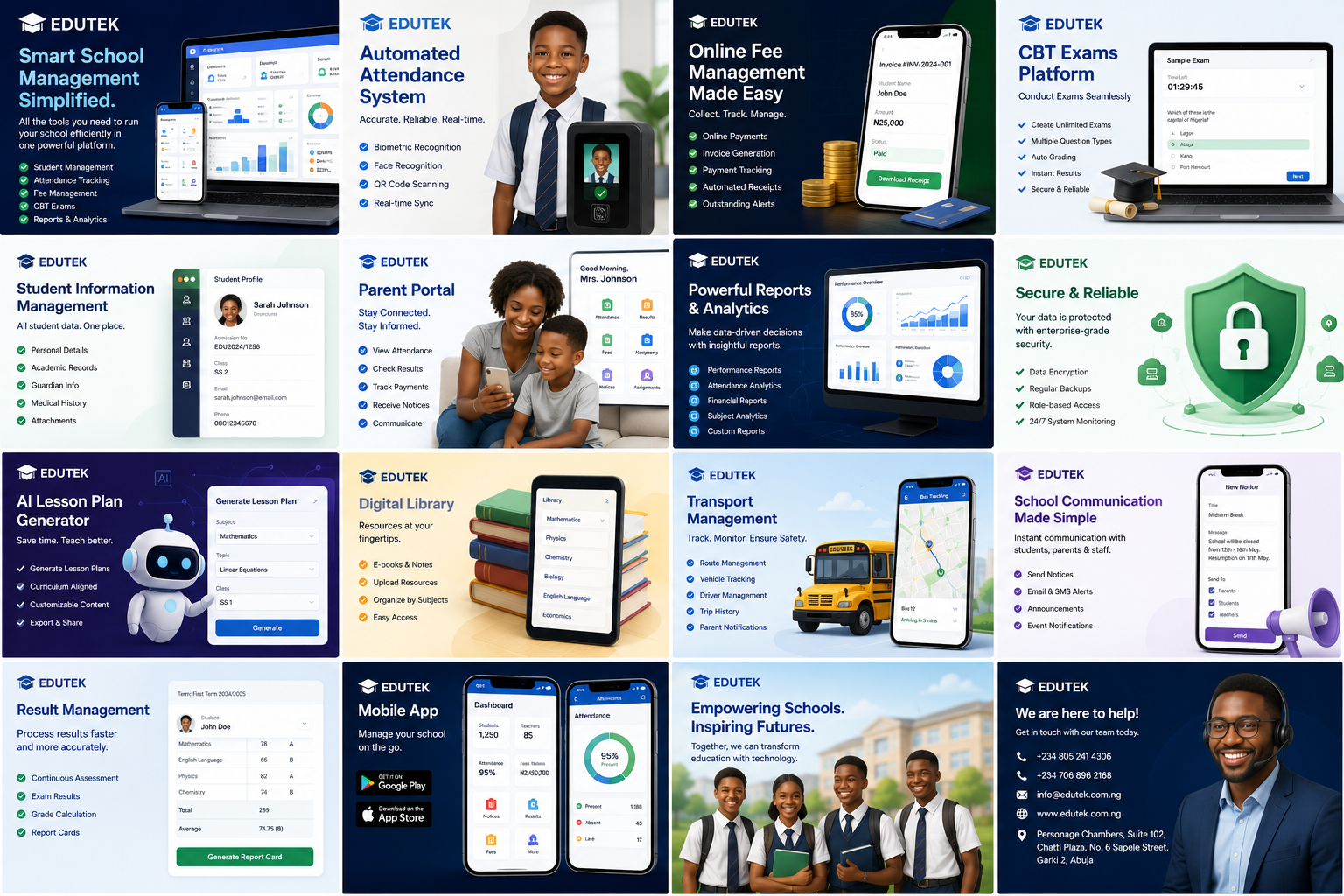
EDUTEK combines all these essential features into one powerful platform designed for modern educational institutions. From student records and attendance tracking to seamless communication, financial management, and an advanced Computer-Based Testing (CBT) system, EDUTEK helps schools streamline operations and improve overall efficiency.
By automating routine administrative tasks, school leaders can spend less time on paperwork and more time focusing on educational excellence and student success.